A production-grade authentication system built on React and Django — featuring JWT access/refresh tokens, role-based access control, protected route guards, automated CI/CD via GitHub Actions, and enterprise security best practices.
Note: This repository is a reference implementation demonstrating architectural approach. Production deployments include additional security hardening not reflected in the public code.
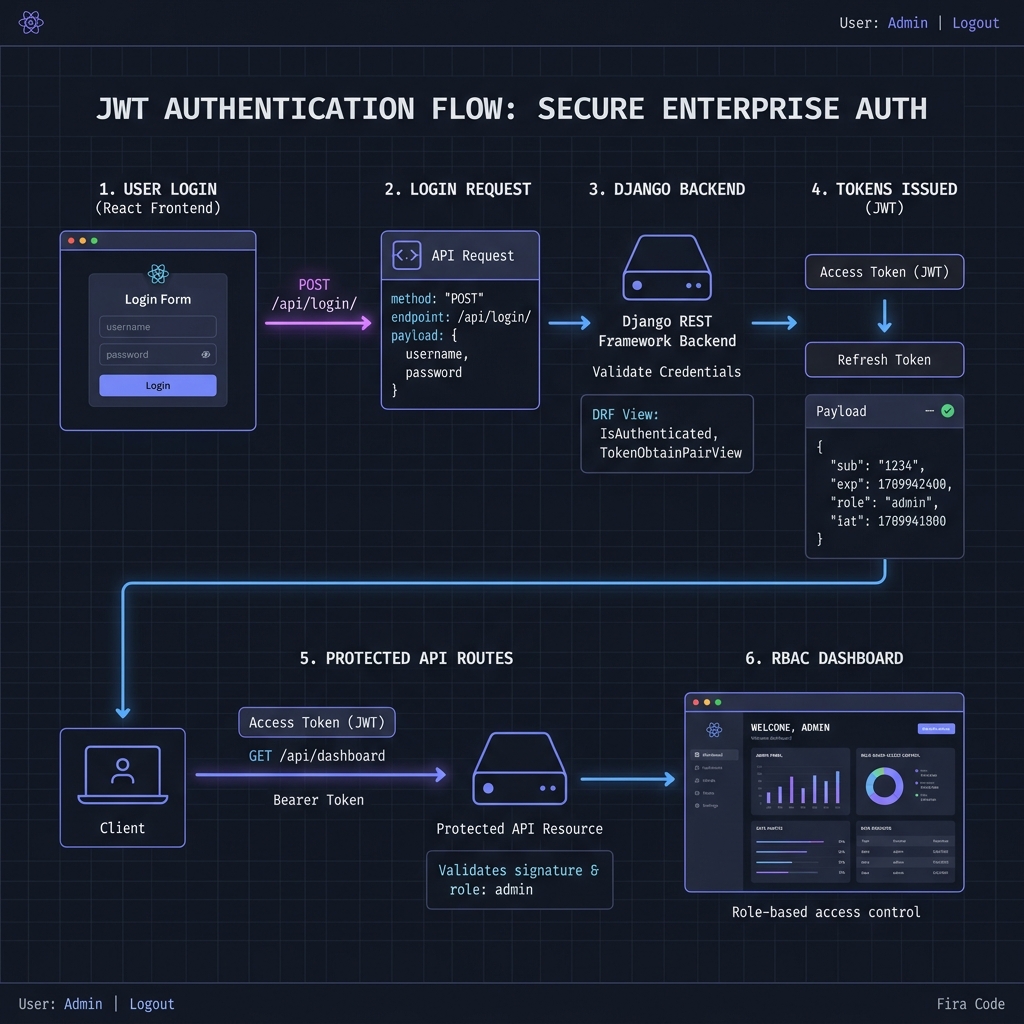
Stateless authentication using signed JWT access tokens (short-lived) and refresh tokens (long-lived) for seamless session continuation.
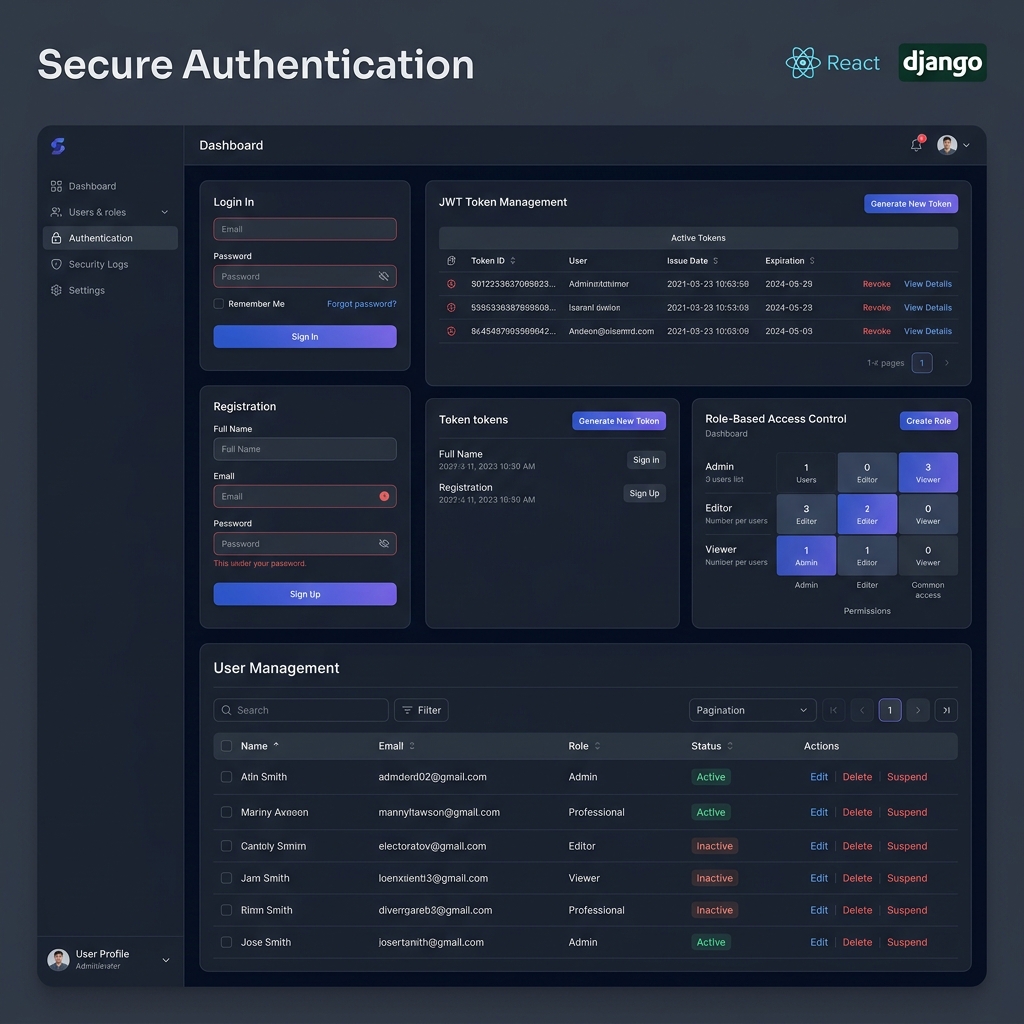
RBAC middleware enforces role permissions at both the Django API level and React route level — users only access what their role permits.
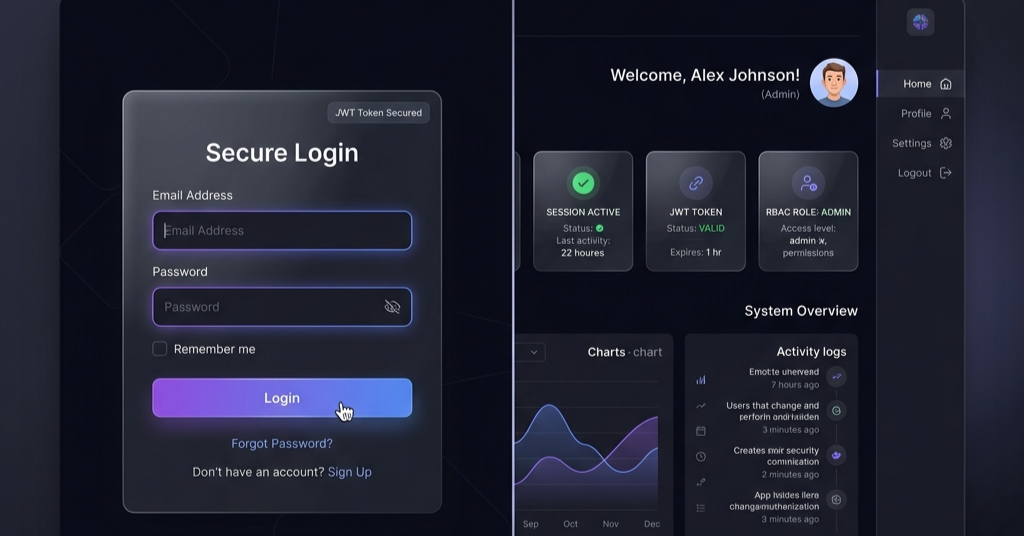
Frontend route guards check token validity before rendering protected components, redirecting unauthenticated users to login automatically.
Axios interceptors automatically retry failed requests with a refreshed access token — keeping sessions alive without user interruption.
Automated workflow pipeline for testing, building, and deploying both frontend and backend components on every push to main.
Clean RESTful API: POST /api/login/, POST /api/logout/, GET /api/user/ — designed for easy integration with any frontend.
JWT is stateless — the server doesn't need to store session data in a database. Each token is self-contained with user identity and role information. This makes it ideal for decoupled React frontends calling Django APIs, enabling horizontal scaling without shared session storage.
Refresh tokens are stored in HttpOnly cookies — inaccessible to JavaScript — preventing XSS attacks from stealing them. Access tokens are kept in memory (React state), not localStorage, to further reduce exposure to XSS. This follows OWASP security recommendations for SPAs.
GitHub Actions triggers on push to main. The workflow runs Django unit tests, builds the React frontend, checks for dependency vulnerabilities, and deploys both services. This ensures every commit is validated before reaching production — with zero-downtime deployment steps.
Yes. The architecture is designed as a scalable foundation. For production, swap SQLite with PostgreSQL, add Redis for token blacklisting on logout, configure HTTPS, set production CORS origins, and integrate a proper secret management system. The modular structure makes each upgrade straightforward.
RBAC (Role-Based Access Control) assigns each user a role (e.g., Admin, User). The Django API checks the role claim from the JWT payload on protected endpoints and returns 403 Forbidden if the role doesn't have permission. On the React side, route components check the stored role before rendering, preventing unauthorized page access.
Let's build production-grade authentication for your application.