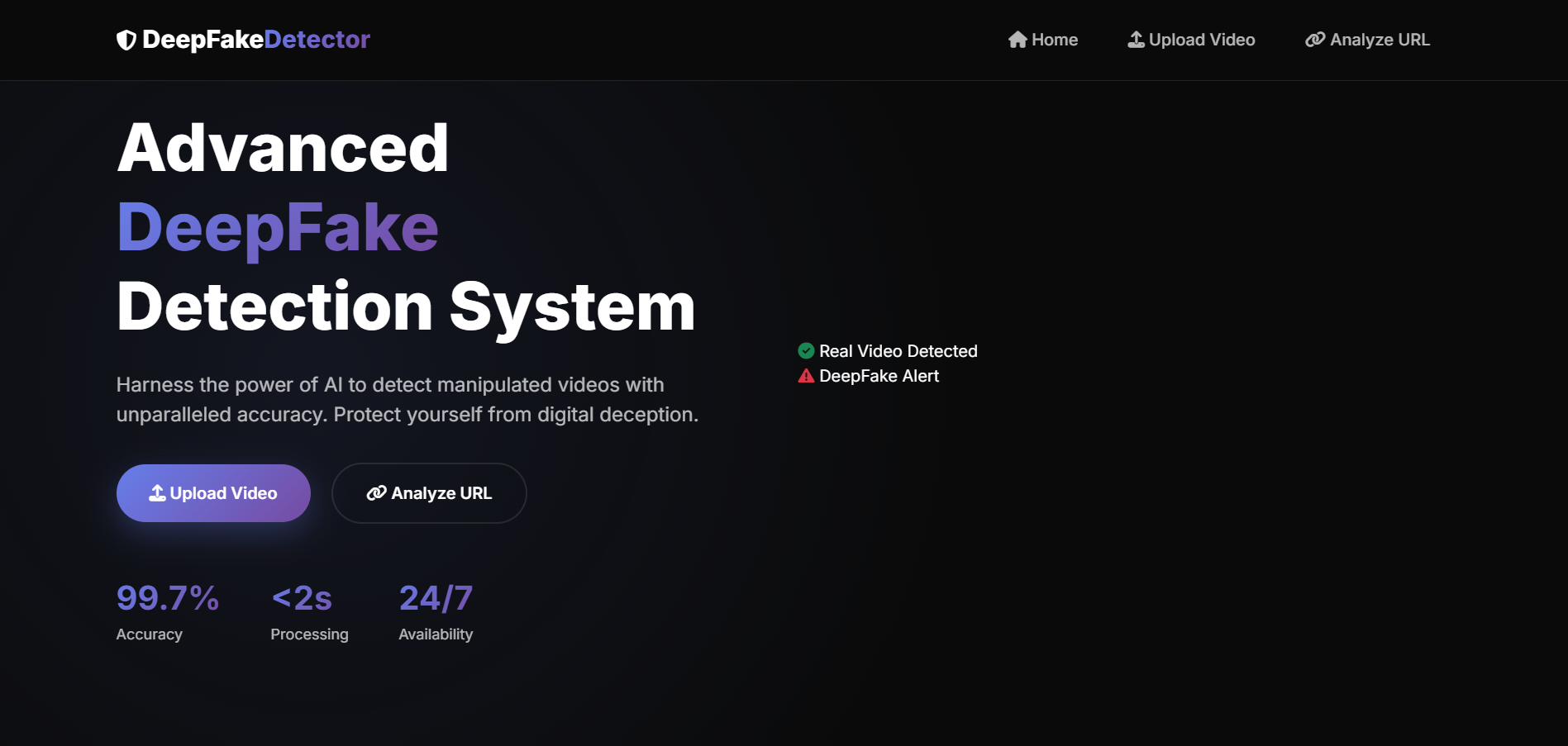
An advanced AI-powered system that detects manipulated videos and audio using Xception-based neural networks, frame-wise analysis, and big data analytics techniques — helping safeguard digital trust in cybersecurity environments.
A multi-stage pipeline from media input to final confidence score report.
Upload video files or provide YouTube/Vimeo/direct URLs. FFmpeg extracts frames at defined intervals for comprehensive analysis.
Separate audio track extraction and analysis to detect audio manipulation independent of video frames.
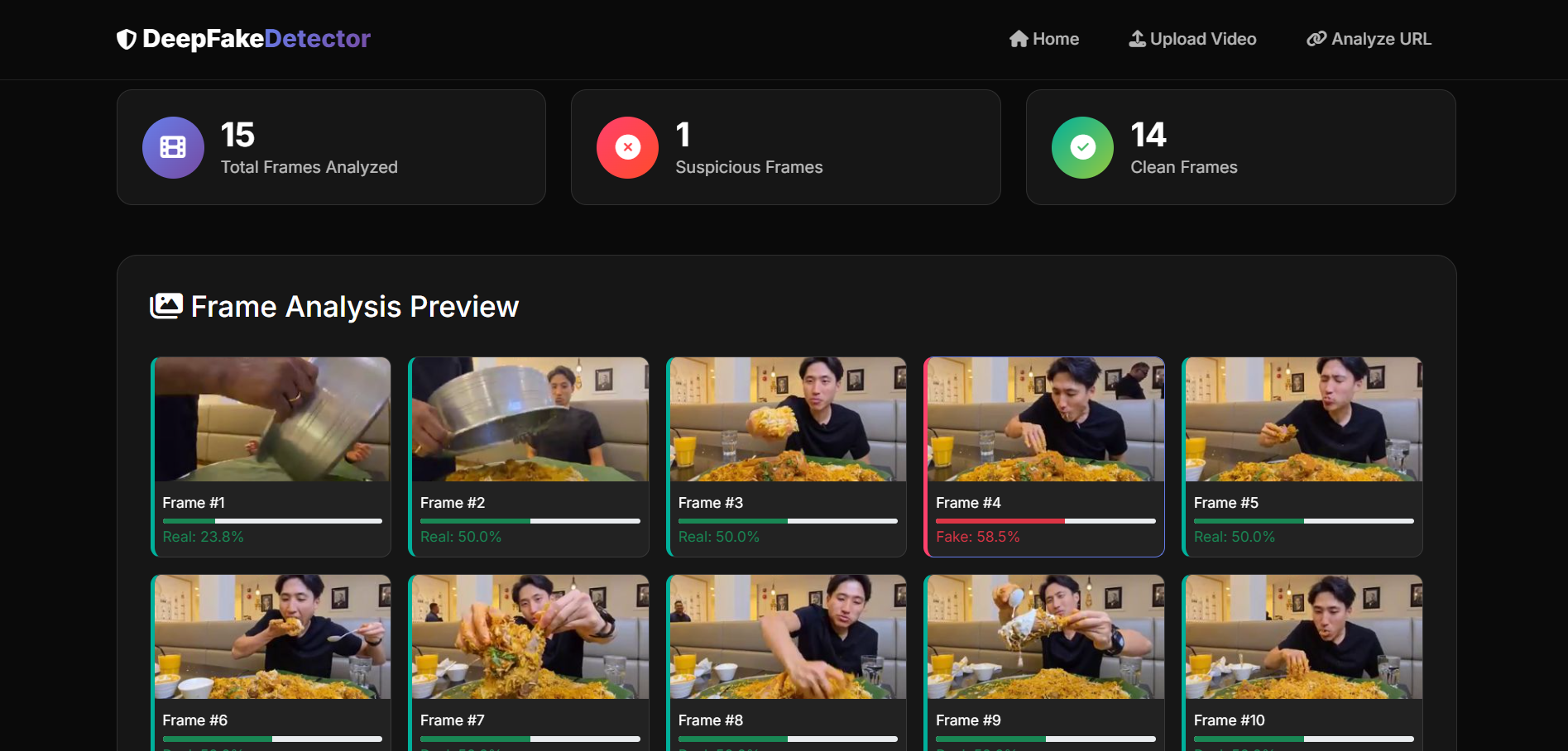
Each frame receives an individual real/fake probability score. Suspicious frames are highlighted with their confidence percentage.
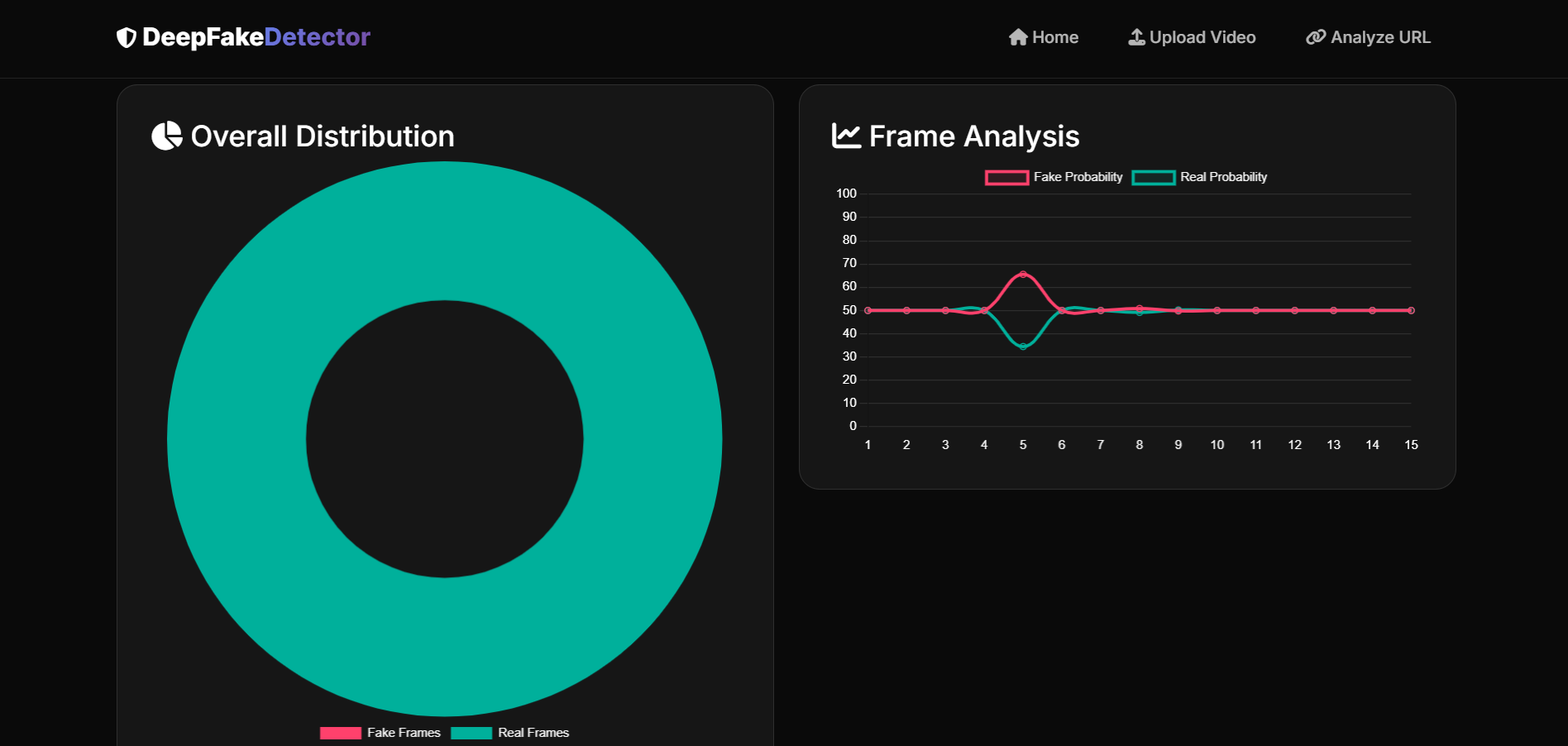
Interactive donut chart for overall distribution and a line graph showing fake vs. real probability across all analyzed frames.
Leverages the Xception depthwise separable convolution architecture — proven effective on FaceForensics++ deepfake datasets.
Clean, accessible Django-powered web UI allowing analysts to submit and review results without any command-line expertise.
The system uses Xception-based neural networks — an architecture developed by Google that uses depthwise separable convolutions. It has been trained and validated on deepfake benchmark datasets (FaceForensics++). The model classifies each extracted video frame as real or fake with a confidence probability score.
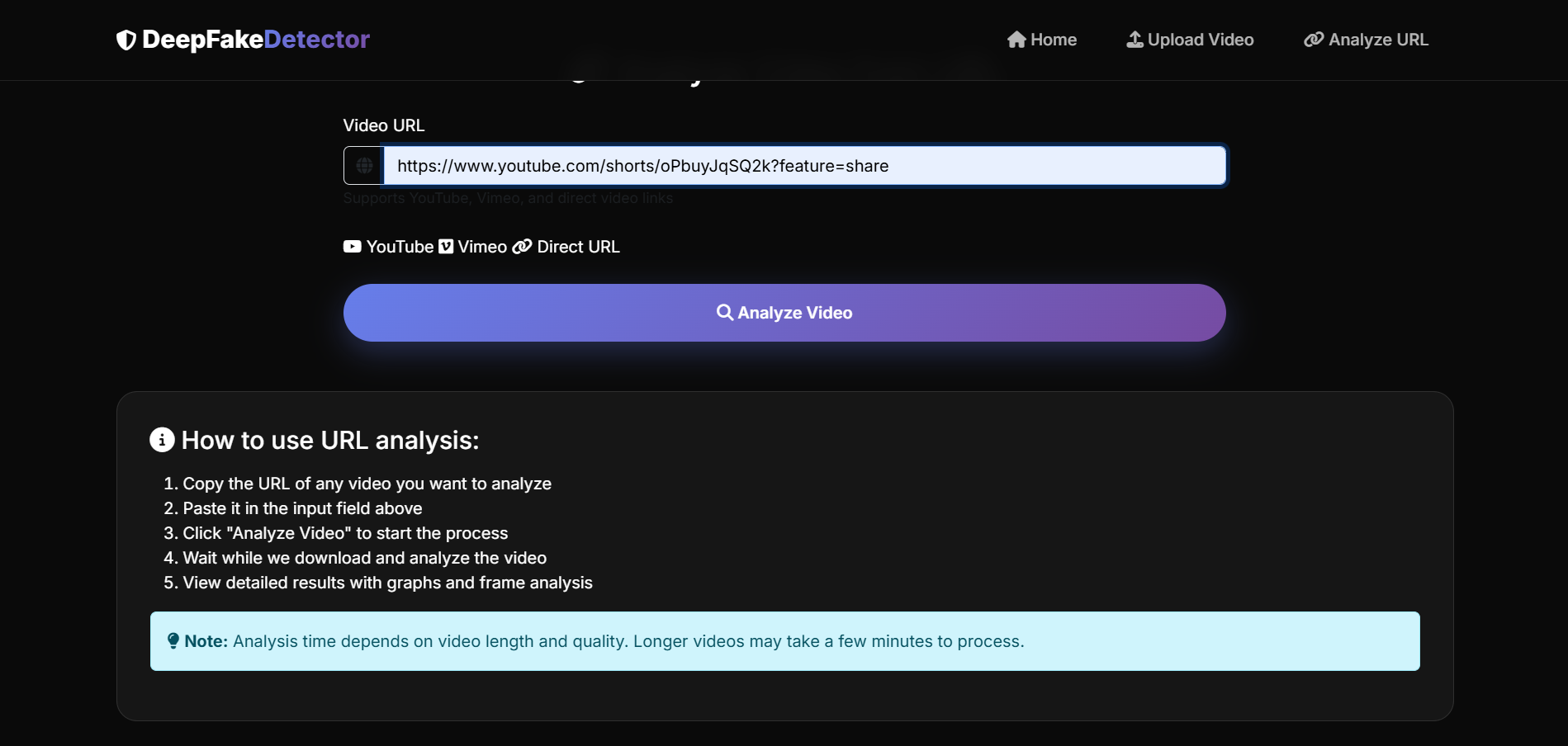
Yes. The "Analyze URL" feature uses yt-dlp to download the video from YouTube, Vimeo, or direct video URLs. The system then processes the downloaded video through the same FFmpeg extraction and Xception inference pipeline as uploaded files.
FFmpeg extracts frames from the video at set intervals. Each frame is individually passed through the Xception model which returns a "fake probability" and "real probability" score. These per-frame scores are visualized as a line chart, and frames flagged as suspicious (fake probability > threshold) are highlighted in the frame preview grid with their confidence percentage.
The big data analytics layer enables processing of large-scale media datasets beyond single video analysis. It provides aggregated statistics, batch processing capabilities, and analytics infrastructure to handle high volumes of media for enterprise cybersecurity use cases — going beyond simple one-off video checks.
The GitHub repository contains the core Django project structure, requirements, and reference implementation. The pre-trained Xception model weights (dl_models/) and any sensitive configurations are not included in the public repository. The project is shared for educational and portfolio demonstration purposes.
Let's build intelligent cybersecurity systems using deep learning and big data.